
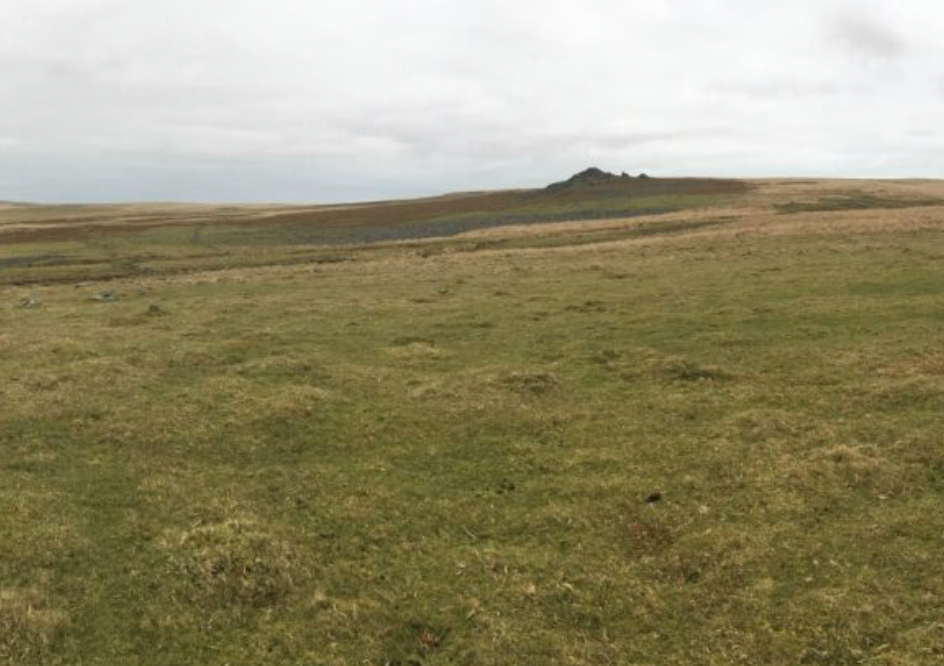
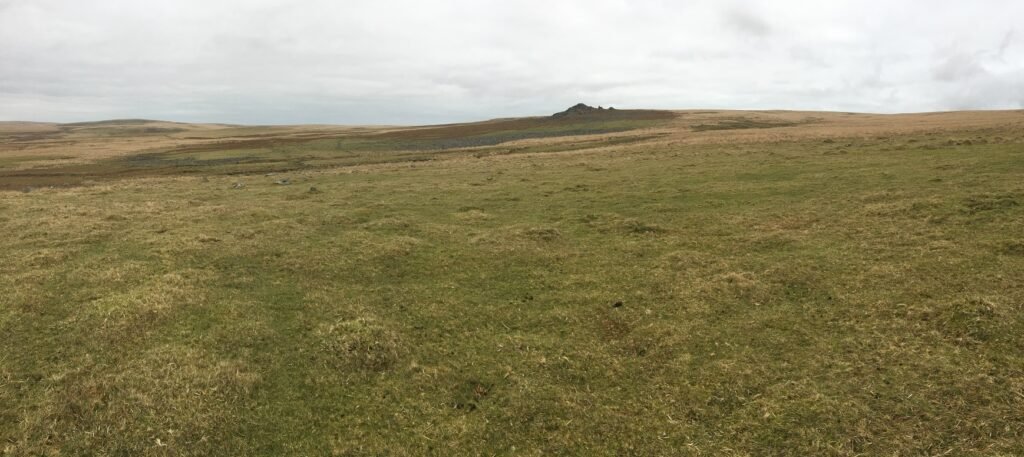
Wild Justice is taking High Court action in a bid to make the guardians of Dartmoor common land ensure the commons are brought back into favourable condition, which will include tackling the destructive effects of over grazing.
The not-for-profit company says the solution to the poor state of wildlife on Dartmoor is not another “talking shop” as recommended in the government’s response to the Fursdon Review earlier this year.
Instead, Wild Justice says the Dartmoor Commoners’ Council (DCC) should use the powers it has been granted by Parliament to enforce measures to bring Dartmoor’s wildlife back into the state demanded by existing legislation.
Dartmoor National Park covers 95,000 hectares, with 46,000 hectares of moorland, 36,000 hectares of which is registered common land. There are 92 separate registered commons on Dartmoor and 54 commons owners who grant rights for “commoners” to pasture sheep, cattle and ponies.
Parts of this common land in the north and south of the National Park comprise areas of nationally and internationally important habitats such as blanket bog and wet and dry heath. Large areas of Dartmoor are designated as Sites of Special Scientific Interest (SSSI) and Special Area of Conservation (SAC).
DCC was formed by statute in 1985 for the express purpose of maintaining the commons and promoting proper standards of livestock husbandry, including the assessment of the number of animals that should be permitted to graze. However, in its application to the High Court, Wild Justice says DCC has not fulfilled its legal responsibilities for the following reasons:
Wild Justice addresses the 2023 Fursdon Review which looked at the relationship between protected areas (such as SSSIs and SACs) and land management (mostly upland grazing and burning) on Dartmoor.
The Fursdon Review recommended the delivery of a Dartmoor-wide, landscape level, vision, supported by a clear delivery strategy. The Review recognised that the already existing Dartmoor National Park Authority’s (DNPA) Partnership Plan provides such a vision, but that it should be reinforced by the creation of a Land-Use Management Group (LUMG) sitting outside the governance structure of the DNPA. The LUMG would facilitate the development of a plan to improve SSSI condition and deliver government targets on Dartmoor.
In a statement submitted to the court Dr Avery says the plan is an inadequate response to the poor state of Dartmoor and adds in his statement: “The solution to the poor state of wildlife on Dartmoor is not another talking shop, but rather requires all regulators, which have been given powers by Parliament, to enforce measures that will bring Dartmoor’s wildlife into the state that existing legislation and government targets require.”
Wild Justice says that overgrazing, particularly by sheep in winter, is the key issue that is holding back the recovery of Dartmoor’s internationally important heathland habitats. This is particularly true on peripheral commons that comprise a significant proportion of its protected sites. They recognize that the spread of purple moor grass, especially on the central blanket bogs, which are also of international importance, is another key issue for Dartmoor. However, Wild Justice maintains that the control of overgrazing and the recovery of the heaths could be achieved if the Commoners Council used the statutory powers afforded to it by the Dartmoor Act.
It is hoped that the application for judicial review will result in a High Court hearing in which DCC’s statutory purpose will be clarified.
In a statement, Wild Justice said:
“DCC was set up with the duty and the powers to protect and enhance Dartmoor’s environment. The fact that all are agreed that Dartmoor is not in a good state shows that thing needs to change, starting with DCC’s reluctance to use the powers that parliament gave it.”
Wild Justice is represented by Carol Day and Ricardo Gama in the environment team at law firm Leigh Day. Solicitor Carol Day said:
“Our client is concerned about the parlous state of the Dartmoor commons and hopes this judicial review will clarify how DCC should be exercising its statutory duties to protect and enhance these nationally and internationally important habitats.”
For press enquiries, or questions about this case, please email admin@wj.samkilday.com