
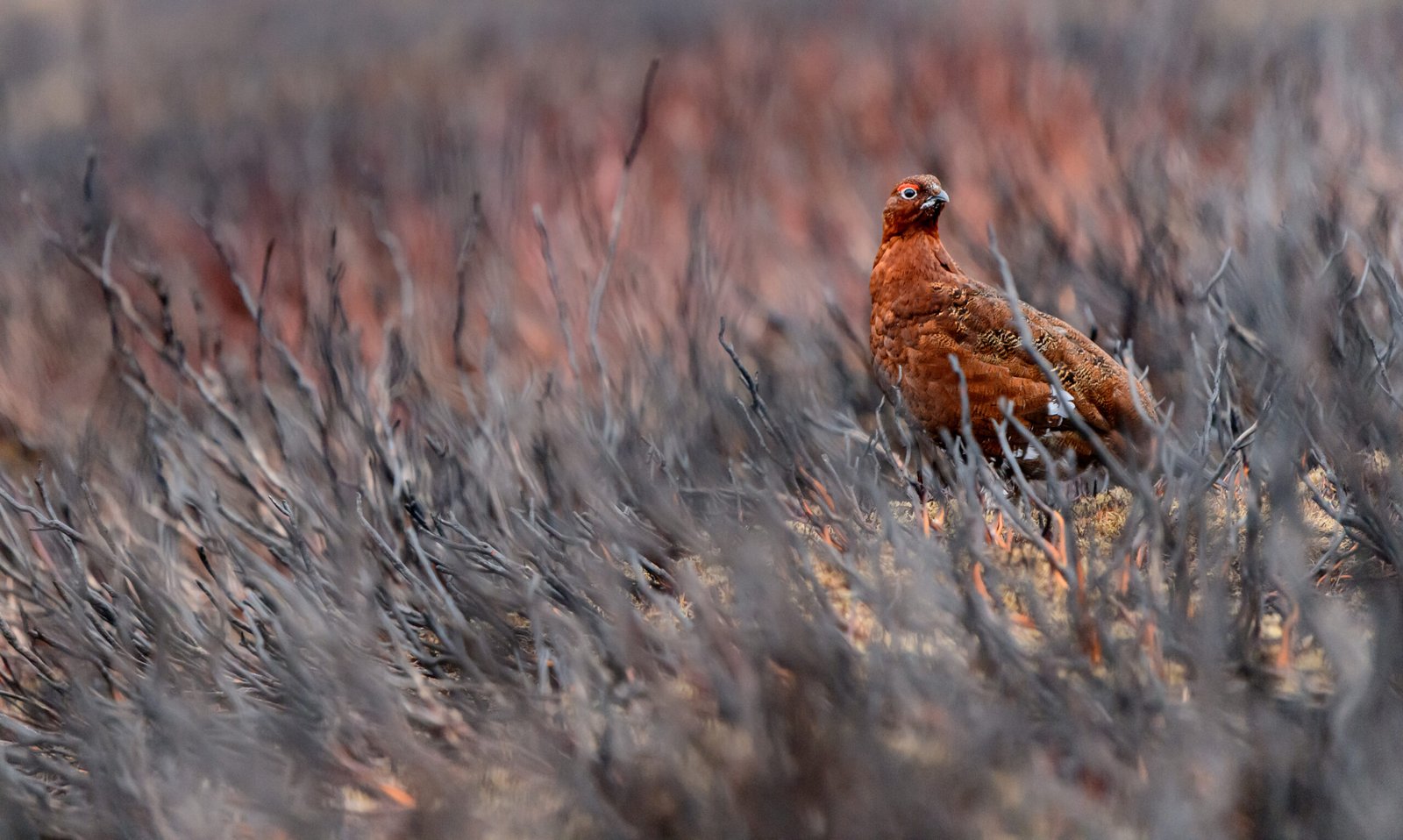
In a nutshell, DGS is just what it sounds like. It’s a leisure activity that involves driving groups of Red Grouse across moorland so they can be shot. A line of noisy, flag-waving beaters do the driving. The shooters lie in wait, concealed in a row of grouse butts and blast away at the birds as they fly towards safety. It is fast-paced and frenetic, and it requires a lot of grouse to provide sufficient targets for the guns. To achieve this, the moors are intensively managed to ensure that conditions are just right for the grouse. That is where the problems begin.
While there is a long tradition of shooting gamebirds in Britain, including Red Grouse, DGS has a more recent history. It became popular in Victorian times, attracting shooters who wanted to kill large numbers of birds. Instead of walking the moors to find a bird or two for the pot, DGS became a numbers game. It was, and still is, about demonstrating your prowess with the gun by hitting as many of these fast-moving targets as possible.
A day’s sport might involve a small group of shooters with each individual paying £1,000 or more for the privilege. Hundreds of birds will be killed in a day and in an average season (between the ‘glorious’ 12 August and 10 December) around half a million grouse will die this way.
All this depends on the moor supporting artificially inflated densities of grouse. Gamekeepers are employed to create perfect conditions for them, at the expense of (almost) everything else. Predators of grouse are killed, legally and often illegally. The vegetation is burnt in patches to create new shoots that the grouse like to eat, and parasites are controlled with medication, provided in trays of grit placed out on the moor.
Estimates vary but between 5 and 8% of land in the UK is managed for DGS, the majority in northern England and Scotland. This includes large areas within our National Parks including the Cairngorms, the Yorkshire Dales, the North York Moors and the Peak District. Much of the land used for DGS falls within SSSIs and internationally recognised wildlife sites, though because of the way they are managed, they may no longer support the wildlife for which they were designated.
Intensive management of the moors is fantastic for Red Grouse but not so good for other wildlife, for the people who live nearby, or for our efforts to mitigate the effects of climate change.
Problems for wildlife
Let’s start with the wildlife. To boost the survival rates and breeding success of grouse, a range of predators are killed routinely. Carrion Crows, Magpies, Foxes, Stoats and Weasels are among the animals shot, trapped and snared. Mountain Hares are shot because they host ticks that spread disease to the grouse. Hundreds of thousands of native animals die on our moors every year, including non-target species that are caught by mistake in traps and snares.
Some predators have full legal protection but for many moorland keepers this is of no consequence. They are killed anyway. The list of animals shot, poisoned and trapped is a long one. It includes some of our best-loved native wildlife, including the Badger, Pine Marten, Golden Eagle, White-tailed Eagle, Short-eared Owl, Hen Harrier, Buzzard, Red Kite and
Peregrine. Studies have repeatedly linked the worst excesses of illegal killing to areas managed for DGS. The Hen Harrier and Golden Eagle have been hit particularly hard, their numbers and breeding ranges held far below what they should be.
The way that moorland vegetation is managed also impacts wildlife. Much of it is kept short to favour the grouse. Trees and bushes are scarce or absent, and patches of tall, shrubby heather are burnt to the ground. This creates ideal conditions for Red Grouse but doesn’t suit many other species. Golden Plover and Curlew can breed successfully alongside the grouse, but the overall diversity of wildlife is desperately impoverished in comparison to sites where the vegetation is allowed to develop more naturally. Conservation agencies undertake formal assessments of moorland SSSIs and they find that a high proportion of the land managed for DGS is in unfavourable condition. Sites that should be the jewels in the crown for our upland wildlife are being failed.
Artificially high densities of grouse encourage the spread of disease. This problem is managed by adding medication to grit provided in plastic trays, dotted across the moor. The drug flubendazole is a toxic environmental contaminant but is dispensed across the moors where it enters the food chain through wild birds. Worse still, trays of medicated grit concentrate birds and facilitate the spread of other diseases in the birds that use them.
Problems for local people
So much for the wildlife. What about local residents? Well, if you live near the moors, you’ll know that when heather is burnt, smoke drifts on the wind, blowing into nearby villages and even cities close to the moors. Sheffield, on the edge of the Peak District, is regularly affected, the residents forced to breathe smoke-filled air, full of particulates, increasing the risk of respiratory disease and even cancer. Local groups have repeatedly complained to Sheffield City Council and they have banned burning on the moors they own. But they are powerless to act against private landowners.
There’s another problem. When the vegetation is burnt it exposes bare ground which becomes vulnerable to erosion. Sediment washes into nearby rivers, harming aquatic wildlife and increasing water treatment costs. Bare ground and short vegetation allow rain to run off the moors rapidly, down into the valleys below, threatening local communities with flooding during severe weather. Homes in Hebden Bridge, below moorland managed for DGS, have been flooded more than once. This problem will only get worse as the effects of climate change begin to bite. It is predicted that rainfall episodes will become more intense; homes will flood more often.
Problems for all of us
Ironically perhaps, given the problems with flooding, burning moorland vegetation contributes to climate change, especially on the peat soils which are often found on the moors. Our peatlands should provide a vitally important store of carbon; they are more effective even than forests at locking up carbon dioxide. But setting them on fire exposes the peat to the air, making it vulnerable to oxidation and erosion. In a climate emergency, peatlands that should be reducing the effects of climate change are, instead, making the problem even worse.
Our stance is very clear. With all the issues summarised above – problems for wildlife, for local residents and for our efforts to tackle climate change – there is no place for DGS in modern Britain. It benefits a tiny number of people. It contributes little to the rural economy. And it causes immense harm.
Banning DGS would allow degraded, impoverished moors to become far richer in wildlife. Populations of some of our best-loved animals would recover. Vital carbon stores would finally be protected. And local people (and visitors) would worry less about flood risk, polluted water and breathing in harmful, smoke-filled air. We are not opposed to the shooting of Red Grouse where this can be done sustainably (though we struggle to see the appeal) but DGS must go.
It is surely only a matter of time before DGS is banned. But until that happens, we continue to campaign for a series of measures that would at least mitigate its worst excesses:
1. DGS across the UK should be licenced, building on the approach taken in Scotland. Moors that disregard laws protecting wildlife could have their licence revoked. Those abiding by the rules have nothing to fear, and yet the industry desperately resists licensing. Why? Is it because this leisure activity is underpinned by illegal activity?
2. The rules around burning must be more rigorous and properly enforced. Crucially, there should be a presumption against burning on peat soils.
3. Government and its agencies must do more to tackle illegal persecution. Wild Justice has contributed to police investigations through our forensics fund but it is high time that the authorities took these crimes more seriously.
4. Hen Harrier brood management/meddling should be consigned to history. All that is needed for this bird to recover is for persecution to stop. Allowing the young of a rare wild bird to be taken into captivity simply to protect grouse (that will ultimately be shot) is bizarre and unacceptable. The brood meddling trial has now ended – we don’t want to see it returned in any format.
5. Snares are appalling for animal welfare, both for the targeted species and the non-target animals they inevitably catch. Regulators in Wales and Scotland understand this and have banned them. England and Northern Ireland should follow suit.
6. Finally, the unregulated use of powerful veterinary drugs for the ad hoc treatment of wild birds must end.