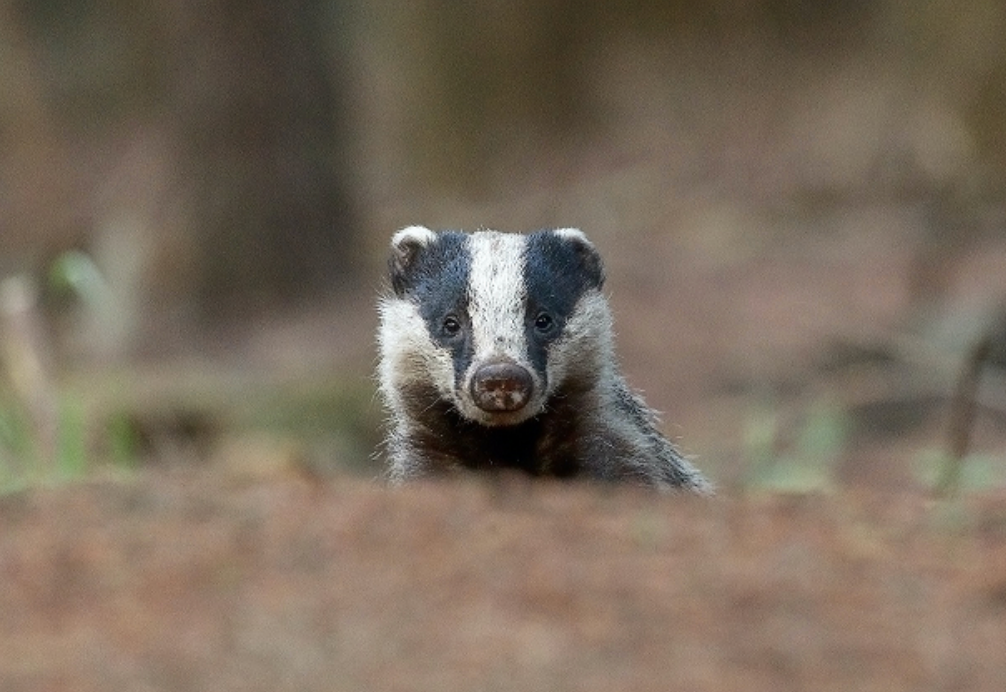
Badgers (and their setts) are strictly protected by our wildlife legislation; the animal even has its very own Act of Parliament. But government and its agencies can issue licences that allow Badgers to be killed, to prevent the spread of disease, among other purposes. This has been happening across increasingly large areas of England in recent years. Groups of local landowners and their employees have been authorised to kill Badgers by shooting and trapping them in so-called cull zones, because of fears they may be spreading bovine tuberculosis (bTB) to cattle.
Efforts to control bTB have had a long and bleak history in the UK, spanning many decades. The disease still results in the death of around 30-40,000 cattle every year. When outbreaks are detected on a farm, the cattle are culled, causing great distress to farmers and costing the government substantial sums in compensation. The disease is spread mainly through cattle to cattle contact, especially when animals are moved from one farm to another, exacerbated by poor biosecurity, but wildlife also plays a role. The Badger is the major focus of attention because it contracts the disease often, and it forages regularly in grasslands used by cattle.
Government policy has chopped and changed over the decades with various attempts to cull Badgers, using a variety of different methods, followed by spells when full protection is restored. The most recent major change was in 2013 when a new Badger culling programme commenced in England. Culling is not permitted in Wales where the policy is to focus on cattle-based measures and Badger vaccination. Scotland is currently largely free of bTB in cattle, while new culling proposals in Northern Ireland have been subject to legal challenge (see below).
Since 2013, culling licences for England have been issued every year, concentrated in the west and the midlands but covering an ever-expanding area. Each licence covers a defined cull zone, with the aim of killing 70-90% of the Badger population within that area. So far, over 247,000 Badgers have been shot or trapped in cages (and then shot) in England since the new culling programme started.
When in opposition, the Labour party’s position was that the Badger cull was ineffective. They promised to end it. But since the election, they have continued with the policy of licensed control. Despite their pre-election pledge, culling continues.
The biggest problem is the sheer scale of the cull and its impacts on local populations of one of our best-loved wild animals, with the public having no say in where this happens. An animal that brings great joy to people, even visiting gardens for food, is becoming ever harder to find in the cull zones.
And yet the evidence shows that culling makes a minimal contribution to reducing disease spread and, crucially, that there are now more effective measures available for tackling this problem. These include tightening up biosecurity and controls on the movement of cattle, and the use of a vaccine for bTB in Badgers. This view is shared by Natural England’s Director of Science who looked at the evidence and concluded that there was ‘no justification for authorising further supplementary Badger culls in 2024 for the purpose of preventing the spread of disease and recommend[ed] against doing so’. Defra ignored this and pressured Natural England to issue the licences, saying that this was to avoid farmers ‘losing confidence’ in disease control.
There are significant welfare issues associated with the cull. Shooting a free-roaming wild animal that fears humans, in the dark, with a high-powered rifle, is extremely challenging. Studies have shown that an unacceptably high proportion of Badgers killed take a long time to die, while others are wounded and able to escape, often to die slowly later. Shooting is poorly monitored and fails to meet even the basic welfare standards recommended by an independent expert panel in 2014.
We believe that until all non-lethal measures for reducing the spread of bTB in cattle have been implemented, and given a chance to work, the culling of Badgers by armed groups roaming the countryside after dark should stop.
Badger culling is cruel and ineffective. Not for the first time, wildlife is being scapegoated to placate the farming lobby while not paying sufficient attention to measures that are sustainable and more likely to be effective. These include improving cattle biosecurity and more effectively regulating their movements, particularly from areas with outbreaks to areas that are disease free. The vaccination of Badgers is another option with great promise. It already happens in some areas, but it could be rolled out more widely instead of continuing with the needless slaughter of wild Badgers.
We agree with Natural England’s Director of Science that there is no longer a good reason to continue to issue cull licences in England. This is the subject of an ongoing legal challenge in England, where we are working with the Badger Trust. We have argued that issuing licences against the best scientific advice about disease control, but rather to maintain the confidence of farmers, is contrary to the wildlife legislation. ‘Keeping farmers happy’ is not one of the licensing purposes in the legislation.
This follows from our successful 2023 legal challenge, in partnership with the Northern Ireland Badger Group, over the decision to allow Badger culling in Northern Ireland. Whenever decisions are taken to cull Badgers without following the full requirements of our wildlife legislation, we will continue to challenge them.