We’re all familiar with the idea of sewage treatment; the processing of raw sewage so it doesn’t pollute our waterways. You might think it’s a mark of progress that we treat our waste water rather than dumping it into our rivers. But if we made improvements in the past, we are slipping backwards. Raw sewage now routinely bypasses the treatment works and is, once again, piped directly into our rivers, lakes and seas. Along with the nutrient run off from ever more intensive livestock farming, this is damaging wildlife and impacting the heath of anyone who ventures down to the waterside.
Sewage disposal is a problem that humans have always faced. How best to get rid of our waste (and that of our livestock) to minimise the risk of disease. When populations were smaller, we relied solely on the natural world, allowing waste to drain into the soil or into rivers where it was swept away to the sea.
As the population grew, this was no longer tenable. So we developed systems to process raw sewage, removing the harmful elements and keeping untreated human faeces separate from water in our environment. On the edge of every town was a sewage works, with those familiar circular treatment beds. Water quality in our rivers improved, even those running through major cities.
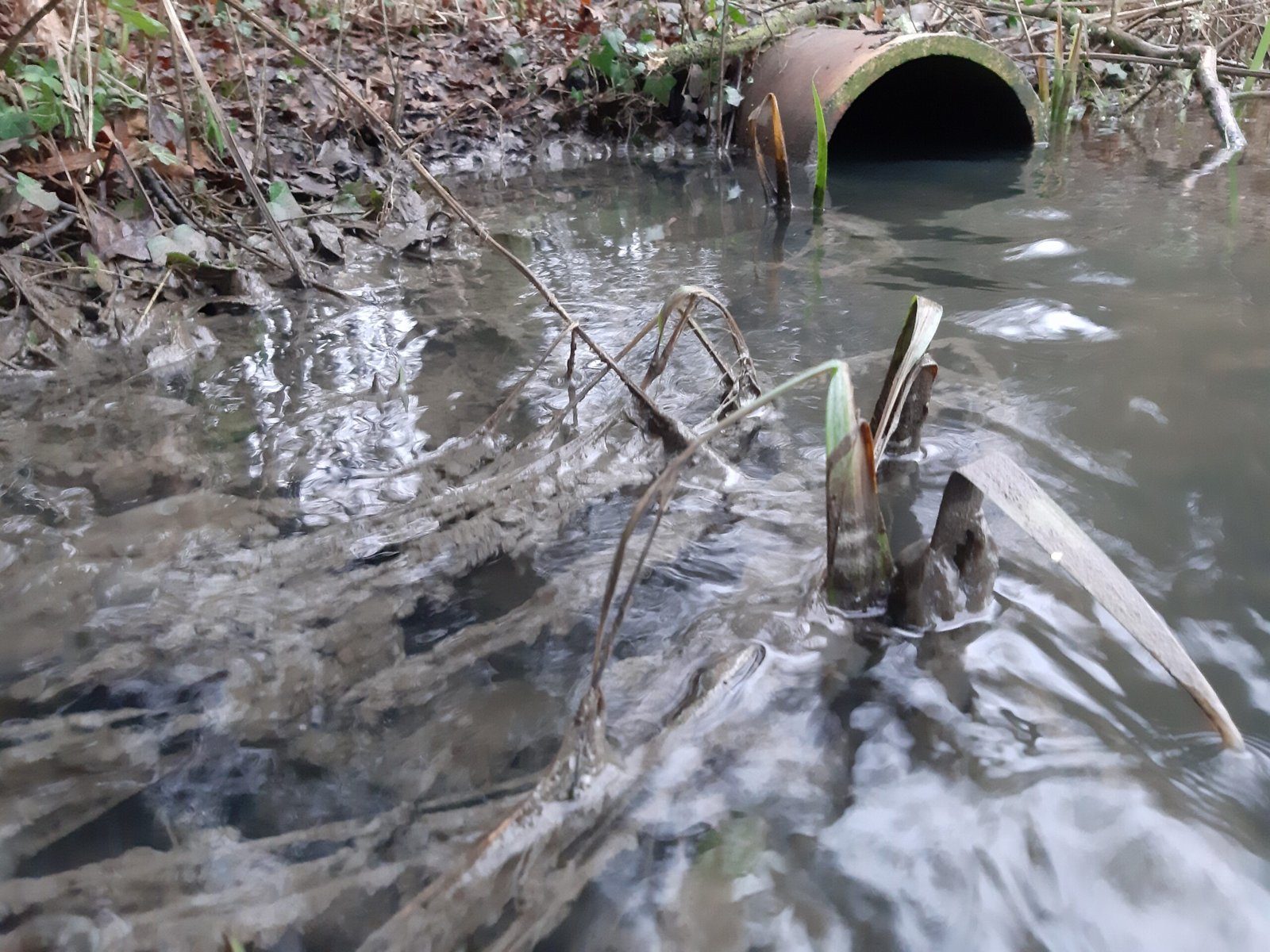
But our ancient infrastructure of sewage pipes can no longer cope. When it rains (and often when it doesn’t) the volume of water overwhelms the system. To avoid raw waste flowing into the streets or backing up into homes, it is dumped into our waterways on an industrial scale.
A parallel problem comes from ever larger and more intensive livestock farms where slurry and manure is generated on a huge scale. All too much of it is allowed to wash from the land and into our waterways.
Well-known sites such as Windermere in the Lake District and the River Wye in south Wales and western England have hit the headlines. These are popular, well-visited places where lots of people use the water. But they are symptomatic of a wider problem, one that now affects waterways and coastal sites across the land.
Since privatisation, the water companies have done very well for profits and shareholder bonuses, while skimping on investment in essential infrastructure. These companies have only two main jobs: to supply us with clean water and to treat the waste. And they are failing. Billions of pounds that could have been used to improve vital sewage treatment infrastructure has gone instead to pay dividends to shareholders. In 2024 there were over half a million recorded sewage discharges, but monitoring is incomplete and the true figure is much higher. Our water bills are spiralling but we are paying for a desperately poor service.
Problems for humans
We all know that raw sewage is bad for our health. It’s full of harmful bacteria and viruses that can cause severe illness, not to mention microplastics and a bewildering cocktail of drugs and toxic ‘forever chemicals’, some of which have been linked to cancer and organ damage. Spend time on the river or take a splash in the sea in the wrong place, at the wrong time, and you risk spending the next few days near a toilet, or worse. Downstream of outflow pipes, the pollution can be so bad that toilet paper, sanitary towels and lumps of solid waste drift slowly by in the water column. Algae thickens the previously clear water and grey, slimy sewage fungus blankets the bottom. Further from its source, the pollution is more insidious, invisible to the untrained eye, but it makes us ill nonetheless.
Problems for wildlife
At least we can choose to avoid the water. Wildlife has no such option. Deteriorating water quality impacts wildlife everywhere, including in protected sites such as river SSSIs that should be rich in aquatic life.
The main issue for wildlife is one of artificial nutrient enrichment from nitrates and phosphates. Whether from raw sewage or manure from intensive farming, they encourage blooms of algae that make the water more turbid and block out the light. When the algae decomposes, this depletes oxygen dissolved in the water, making conditions more hostile for a whole range of wildlife. In the worst cases, dead zones are created where little can survive; fish rise to the surface to take a few final gasps of air before giving up the fight.
The impact of toxic chemicals on wildlife is often poorly understood but it is inconceivable that all the drugs, microplastics and other toxic chemicals that flow into aquatic habitats are having no adverse effects. Estrogenic hormones, for example, are known to cause problems, feminising male fish and impairing reproduction.
It has fallen to small charities and individual campaigners to bring these problems to wider public attention. But for the next stage, that of taking meaningful action, government and its regulators will finally have to step up.
Along with others, we have tried to encourage change through court action, but the regulators are slippery, passing responsibility from one to the other. Ofwat, the Environment Agency, and the statutory conservation agencies all have a role to play, and all are failing. Monitoring is woefully inadequate, and on the rare occasions where companies are prosecuted, for things everyone knows they shouldn’t be doing, the fines are pitiful – a drop in the ocean of excess profits, offering little incentive to improve.
Dealing with toothless regulation is part of the solution, both for sewage treatment and intensive agriculture. We have a planning system that should take environmental impacts properly into account when intensive livestock farms are sited near rivers. And we have regulators that must do more to call out poor behaviour, with the power to impose meaningful penalties when water companies or farmers ignore their obligations.
We wonder, though, whether the system is so broken that the only effective solution is to take water companies back into public ownership. We are not financial experts, but we’re guessing there’s a good reason why England, Wales and Chile are alone in having handed complete control of their water supply and treatment to private firms. Nowhere else are profits and shareholders prioritised so blatantly over the health of the environment.
Why do other countries do things so differently? We think the answer is obvious. And we think the time has come for meaningful change instead of yet more empty words and obfuscation.