
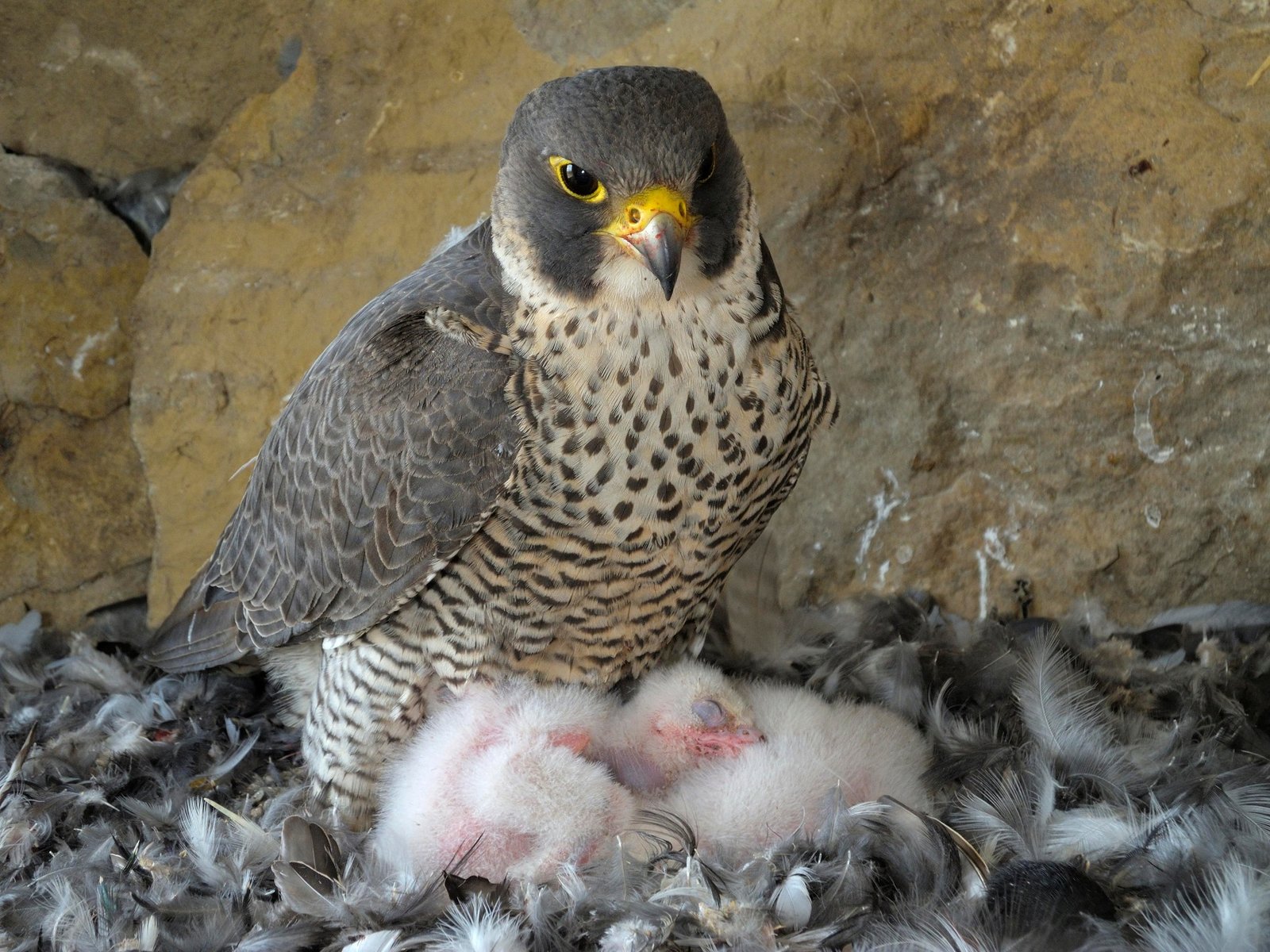
Birds of prey have been legally protected for decades, but old habits die hard; raptors are still illegally shot, poisoned and trapped by people who see them as a threat to their interests. Conflict areas include the predation of livestock and racing pigeons, but it is the protection of gamebirds for shooting that leads to the majority of deaths.
Raptors have long been killed by people worried about the threat to livestock or even to children. Old folk stories tell of White-tailed Eagles raiding villages and flying back to the nest with a baby clutched firmly in the talons; no doubt some of these tales were once believed. Concern for livestock was a more rational fear though one that was often exaggerated. When a valuable animal dies, it has always been easier to scapegoat birds of prey rather than face up to problems caused by poor husbandry.
In the early days, ingenious methods of trapping were devised to catch adult birds, and nests were raided to destroy the eggs or young, but our impact on populations was limited. And then, in the second half of the nineteenth century, everything changed.
Two new developments sealed the fate of many raptors. The introduction of driven game shooting for sport involving Pheasants and Partridges in the lowlands and Red Grouse in the uplands, led to the employment of small armies of gamekeepers to hunt and harry anything that might threaten gamebirds. This went hand in hand with new, highly efficient killing methods including modern traps, poison baits and guns of ever improving accuracy.
This was all too much for many of our once common raptors. By the early 1900s the White-tailed Eagle, Red Kite, Marsh Harrier, Hen Harrier, Peregrine and Goshawk had either been lost completely or reduced to tiny remnant populations in remote parts of the country. The Osprey too was lost, perceived as a threat to fish stocks, with the final birds hunted down relentlessly by taxidermists and collectors.
But times change. Attitudes change. Most of us now value our birds of prey as iconic species. We admire the way they eke out a perilous living at the top of the food chain, survival always dependent on finding one more item of prey. We have moved on from those dark days of routine persecution. Haven’t we?
Not all gamekeepers resort to illegal persecution. But modern methods of control are brutally efficient so considerable damage can be done by those who continue to flout the law. Gamekeepers bent on destruction roam their estates with military-grade weapons, complete with thermal imagers that allow the killing to continue after dark as birds rest through the night. Poison baits are especially ruthless, killing anything that eats the bait, even pet dogs if they are unlucky enough to find it.
The statistics confirm that it is game shooting estates where most of the killing takes place, with a depressing annual roll call of dead birds that includes Buzzards, Red Kites, Peregrines, Goshawks, Hen Harriers, eagles, owls and more. Worryingly, we know that only the tiniest fraction of birds killed will ever be found. Those pulling the trigger, or setting the traps, or putting out poison, operate on private estates, often far from prying eyes, and they make every effort to conceal their criminality. Only occasionally, when a crime is witnessed, or a bird escapes its killer but dies later and is recovered, do these crimes come to light.
While many raptors have increased since Victorian times (some helped by reintroductions), persecution continues to have an impact. It slows the rate at which raptors can recover from past losses, and it reduces their ability to recolonise places from which they have been lost. Many species are much harder to find close to intensive game estates, and in some places they are missing altogether. The White-tailed Eagle, Golden Eagle, Goshawk, Marsh Harrier and Hen Harrier are all restricted to no more than a few hundred pairs, their populations held well below what they should be by all the unnecessary deaths.
Campaigns to prevent birds of prey being killed have been running for decades with little success. Even when there is a successful prosecution, the penalties are pitifully inadequate, usually a fine of just a few hundred pounds, often paid by the gamekeeper’s employer.
We have helped with 68 investigations through our Raptor Forensics Fund, with 8 cases leading to successful prosecutions (7 involving a gamekeeper). New technology might help catch more criminals in future, with drones, remote cameras to watch over nest and roost sites, and sophisticated satellite tags that allow birds to be tracked in close to real time; when they are killed, we’ll know exactly where it happened. But all this will count for little unless wildlife crime is taken more seriously, with penalties appropriate for those prosecuted successfully; only then will there be a meaningful deterrent effect on others involved in the same crimes.
We need government to prioritise wildlife crime, and we need the police to be sufficiently well resourced to undertake efficient criminal investigations. We have been happy to contribute to investigations, but it really shouldn’t fall to small groups like Wild Justice to help fund this work.
Making the most serious wildlife crimes recordable and notifiable would help the police to collate information so they can identify crime hotspots and plan their responses more effectively. Today, shamefully, it is left to organisations like the RSPB to compile the annual wildlife crime figures.
We need new legislation that places more responsibility for persecution on those who control the estates where it happens. A system of licensing for all shooting estates would mean the licence could be withdrawn if crimes were discovered. Estates that stay within the law would have nothing to fear, so you might wonder why this idea is so vehemently opposed by the shooting industry. The annual crime figures provide a clear enough answer.
As we explain here we think that driven grouse shooting is an industry so out of control that banning it, rather than licensing it, is the only sensible option.
If nothing is done, large parts of the game shooting industry will continue to promote a leisure activity that is underpinned by criminal activity. We are (or at least we should be) so much better than that.